Real Estate
Section 8 Housing Explained How It Works and Who Qualifies
April 27, 2026
Discover the ins and outs of Section 8 housing, eligibility, and the application process. Secure affordable housing with confidence today!
Section 8 housing, formally referred to as the Housing Choice Voucher Program, is a vital federal initiative aimed at providing low-income families, seniors, and individuals with disabilities access to affordable housing options. The program plays a significant role in alleviating the financial burden of housing costs by allowing participants to rent homes in the private market that meet their needs without compromising on quality or location.

Under this program, eligible participants receive housing vouchers that help subsidize a portion of their rent. For instance, if a household qualifies for $1,500 in monthly rent, the housing authority typically covers a significant portion, leaving the family to pay just 30% of their income. This flexibility enables families to choose where they live, ensuring they can settle in safe neighborhoods that support their well-being.
Local housing authorities are instrumental in managing the program, as they determine eligibility, handle applications, and enforce compliance with federal guidelines. Their role ensures the program remains effective and accessible to those who need it most.
Eligibility Requirements for Section 8 Housing Assistance
To be eligible for Section 8 housing assistance, applicants must satisfy several specific criteria:
- Income Limits: Generally, a household's income shouldn’t exceed 50% of the median income for their locality, which is assessed based on family size and regional economic conditions. For example, if the median income for a family of four in a particular area is $60,000, those seeking assistance must earn less than $30,000 annually.
- Family Size: The number of household members influences both the income limits and the size of the housing unit the family may qualify for. Larger families typically have higher limits to ensure their needs are adequately met.
- Residency Status: Applicants are required to be either U.S. citizens or possess eligible immigration status. Verification documents will be required as part of the application process.
- Priority Groups: Certain populations, such as the elderly, disabled individuals, and those experiencing homelessness, may receive prioritization within the application process. This provision is crucial in ensuring that the most vulnerable members of society receive timely assistance.
It is vital to consult local guidelines, as eligibility criteria can significantly differ from one region to another. Prospective applicants should reach out to their local Public Housing Authority (PHA) for precise details tailored to their circumstances.
The Application Process for Securing Section 8 Housing
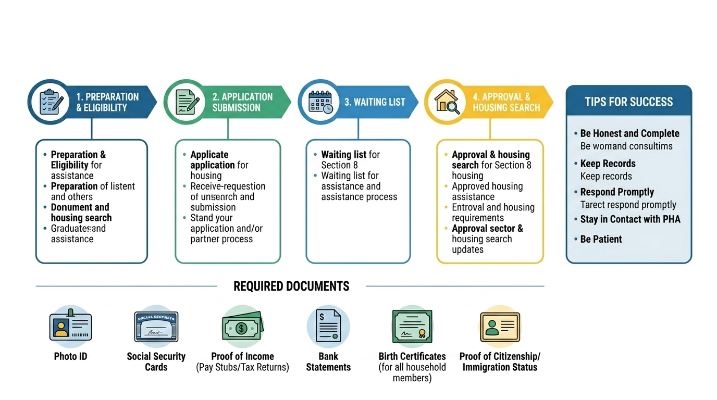
Applying for Section 8 housing may seem intimidating, but following a clear, organized approach can simplify the process. Here’s a friendly step-by-step guide to assist applicants:
Step 1: Prepare Necessary Documents
Begin by collecting essential documents such as proof of income, identification, and family size. Having these ready can streamline your application process.
Step 2: Verify Eligibility
Visit your local Public Housing Agency (PHA) website to familiarize yourself with the eligibility requirements. Programs usually prioritize low-income households, so understanding these criteria is crucial.
Step 3: Monitor Open Enrollment
Section 8 applications are only accepted during designated open enrollment periods. Keep an eye on announcements from your local PHA, as these windows can be limited and vary by location.
Step 4: Fill Out the Application Form
When enrollment is open, complete the application form. It’s important to provide accurate and honest information, as discrepancies can lead to delays or disqualification from the program.
Step 5: Submit Your Application Promptly
Submit your application as early as possible during the open enrollment period. After submission, it’s wise to follow up with the PHA to ensure that your application has been received.
Tips for Enhancing Your Application
- Review Your Information: Ensure all your information is accurate.
- Follow Guidelines: Adhering to instructions shows that you are organized and committed.
- Exercise Patience: The application process can take time, so maintain a positive mindset.
By following these steps, you will be well-prepared to navigate the Section 8 application process effectively.
Required Documents for Your Application
When applying for Section 8 housing assistance, it is essential to gather accurate and comprehensive documentation. Here are common documents you’ll need:
- Proof of Income: This includes documents like pay stubs, tax return forms, or benefits statements that verify your financial status to determine eligibility.
- Identification (ID): Acceptable forms of ID could include a driver’s license, state ID, or passport, which confirm your identity and eligibility within the program.
- Social Security Numbers (SSNs): SSNs are necessary for all household members and are required for eligibility and record-keeping.
- Proof of Residency: This can be established with a lease agreement or recent utility bills to show your current living situation.
- Family Composition Information: Documenting all household members and their relationships is crucial for determining the appropriate voucher size.
Accurate and complete documentation is vital in avoiding delays. Missing or incorrect information can significantly lengthen the time required to process your application.
Potential Delays and Challenges in the Application Process
The Section 8 application process can often be overwhelming due to factors like lengthy waiting lists and issues with documentation. Applicants frequently experience frustration as they await assistance, uncertain of when help will arrive. Documentation errors can lead to significant delays, which adds stress to an already challenging situation. Additionally, the complexity of the application itself might discourage some applicants from completing it entirely.
To manage these challenges, it's important to have realistic expectations regarding timelines. Many waiting lists can extend for years. Keeping organized records and maintaining regular communication with housing authorities will help prevent further delays and ensure you stay informed on your application status. Acknowledging the emotional strain these challenges can cause and remaining persistent is key to successfully securing stable housing.
Post-Application Expectations
After submitting your Section 8 housing application, it's essential to understand what to expect from your local housing authority. Processing the applications may take from several weeks to several months, depending on the volume of applications that are being reviewed. Housing authorities generally communicate through mail or email to update applicants on their application status, including whether they are on a waiting list or approved for assistance.
If your application is denied, don’t be discouraged; you have the right to appeal. Instructions for how to proceed with an appeal will be provided along with your notification of denial. Patience remains a vital part of this process, as delays are common. Stay attentive to your communication channels for updates, and feel free to reach out to your housing authority if you have queries regarding your application status.
Empowering Yourself in the Application Process
In conclusion, understanding how to navigate the Section 8 housing application process is essential for successfully obtaining assistance through the Housing Choice Voucher Program. Being informed about eligibility requirements and potential hurdles can considerably enhance your chances of securing the help you need. We recommend reaching out to local housing agencies or counselors for personalized guidance that caters to your unique situation. While the application process may initially seem daunting, knowledge and resilience empower you to navigate it with confidence. Seize this chance to advance towards secure and affordable housing, knowing that assistance is available to help you along the way.


Just For You

Parenting
What Are the Best Baby Sleep Sacks Safety, Types, and Buying Guide
May 16, 2026

Pets
How Much Dry Food to Feed a Cat
June 21, 2026

Tourism
Affordable Honeymoon Destinations Romantic Trips That Don’t Break the Budget
April 9, 2026
Shopping
Best Cat Flea Products That Help Keep Your Cat Safe and Comfortable
April 18, 2026
Recommended For You
Parenting
Car Seats for Newborns A Practical Safety Guide for New Parents
April 22, 2026

Pets
Potty Training a Puppy A Complete Guide for New Owners
May 29, 2026

Tourism
Exploring Together The Ultimate Guide to Family Adventure Travel
April 21, 2026

Shopping
Best Product Skin Care Choices for Healthy, Balanced, and Radiant Skin
April 15, 2026